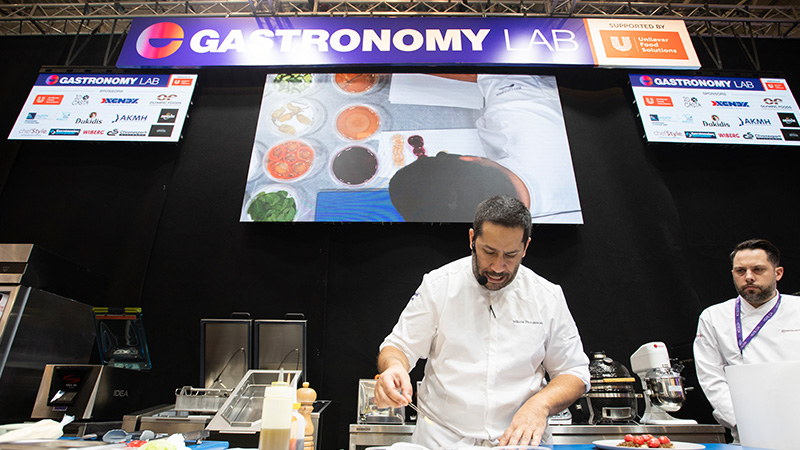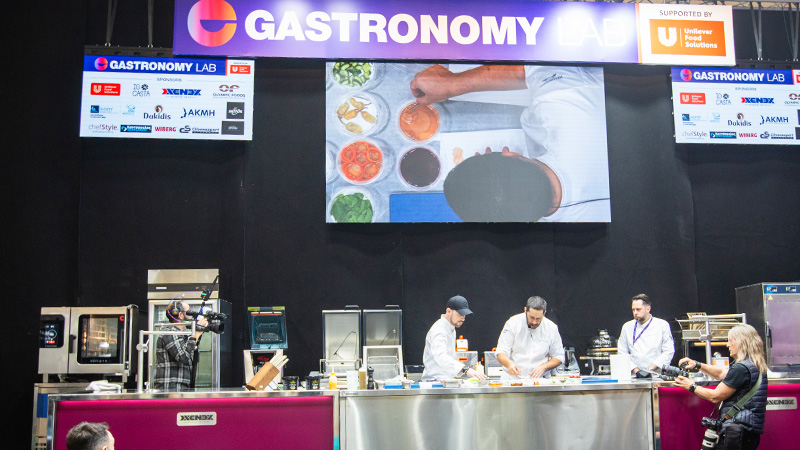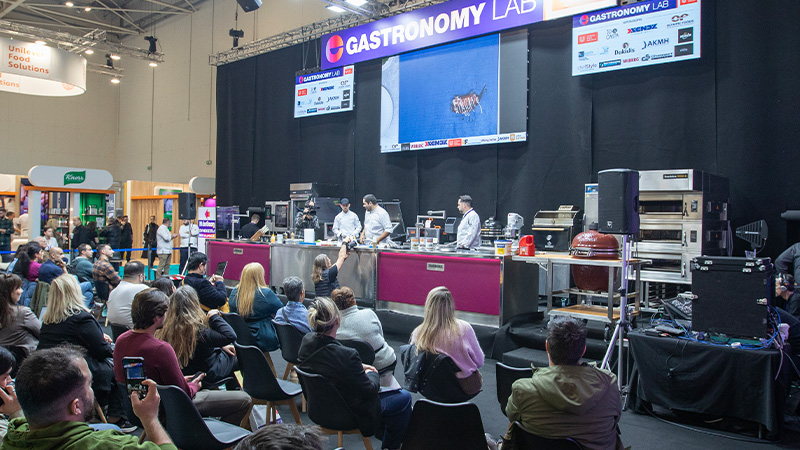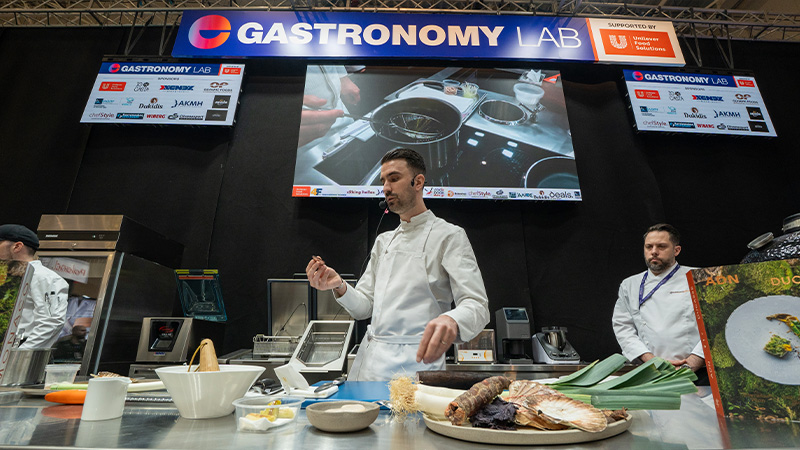



The Role of Creativity and Sustainability in Contemporary Gastronomy
Monday, 16th February
From locality and modern cuisine to AI and Haute Pâtisserie
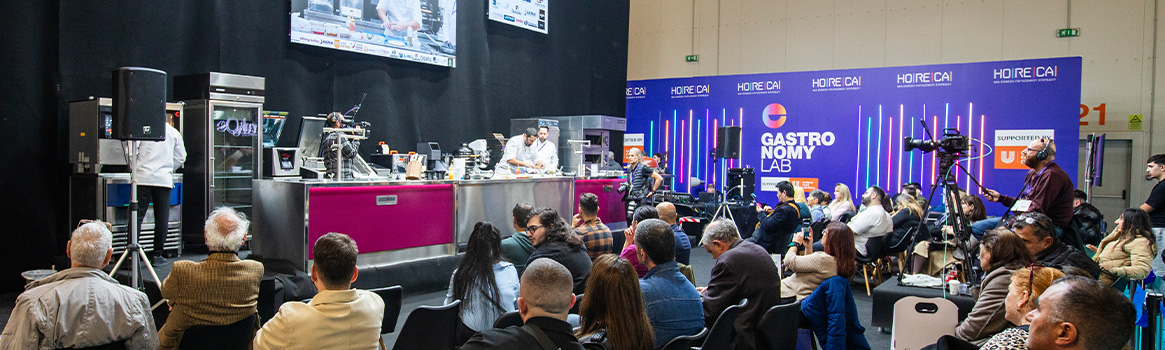
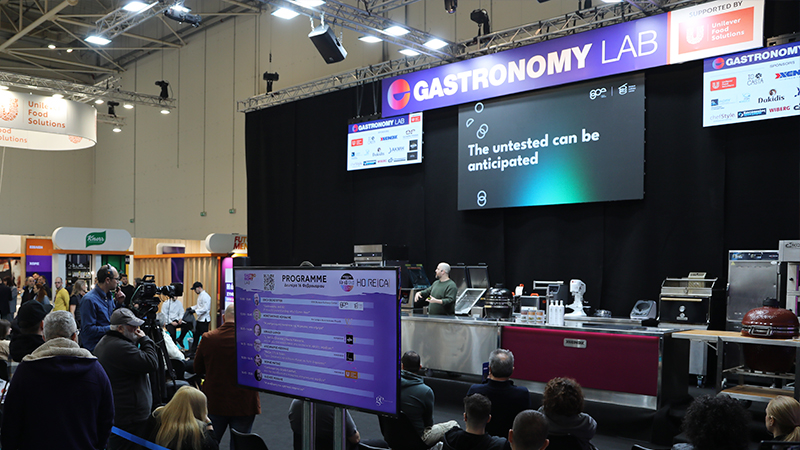
The final day of the Lab began dynamically with Erich Eichstetter, a rare and truly “hybrid” figure in today’s gastronomic landscape, and his talk “Gastronomy and AI: 21 Keys to Understanding What Comes Next”.
The Head of Digital Transformation, Tech Scout and New Digital Product Developer at GOe (Gastronomy Open Ecosystem) of the Basque Culinary Center, one of the world’s leading institutions in gastronomic research, presented, for the first time globally, the Center’s findings on the use of AI in gastronomy (and food on the planet more broadly). He offered attendees a preview of the technological developments ahead and the ways they will shape taste, food and ingredient management, foodservice operations, packaging, and logistics.
He also discussed how Artificial Intelligence can help humans use food as medicine, noting that some hospitals are already moving in this direction. Importantly, Mr. Eichstetter emphasized that AI does not replace creativity and that gastronomy will evolve through the collaboration of chefs, researchers, and startups.
Chef Konstantinos Koufalis from the restaurant Venetian Well then introduced the contemporary “face” of Corfiot cuisine through his presentation “The Gastronomic Identity of Corfu Today.” He prepared two dishes live: Evia langoustine tartare with chives, fig leaf oil, lemon zest, paired with caviar, langoustine consommé tuile, vinegar gel, herbs, and a warm soup of sorrel and unripe grape; and a milk-fed lamb saddle à la rosé with chard and white onion purée, pickled pearl onions, glazed chard, tsoukounes made from lamb shoulder, beef mince and smoked Corfiot pancetta, lamb jus, wild garlic pickle, and a miso–taramanthos glaze.
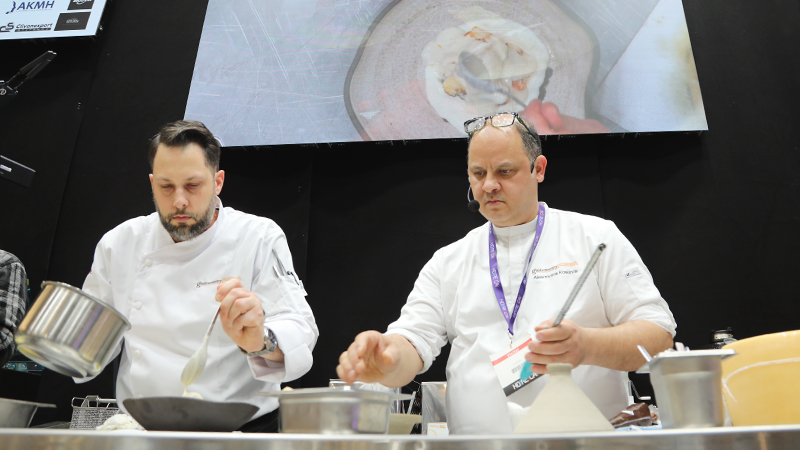
Arnaud Larher, one of the most distinguished figures in French haute pâtisserie — a MOF Pâtissier with a clear personal signature — captivated the audience with his session “L’Art du Chocolat Haute Pâtisserie: From Filled Chocolates to High-Precision Viennoiserie”.
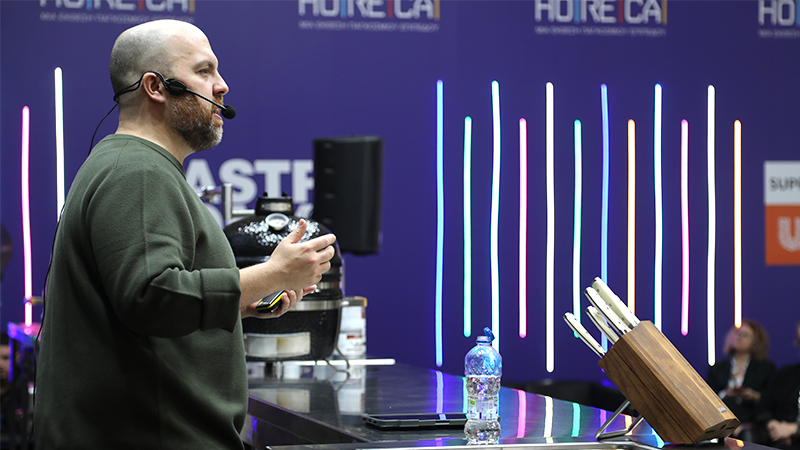
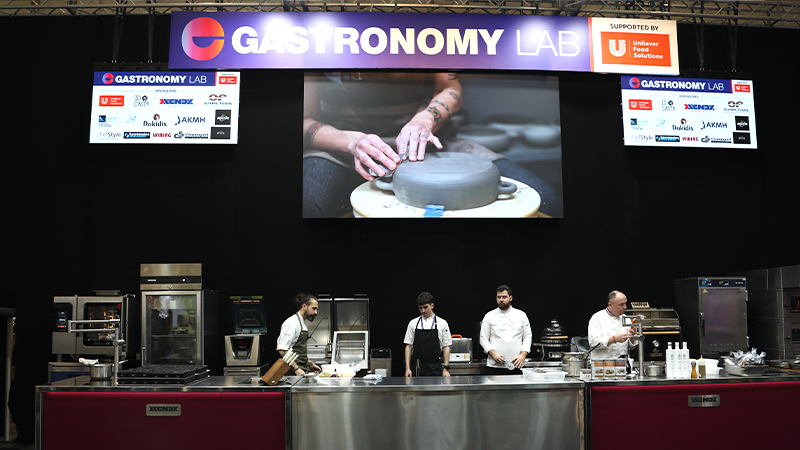
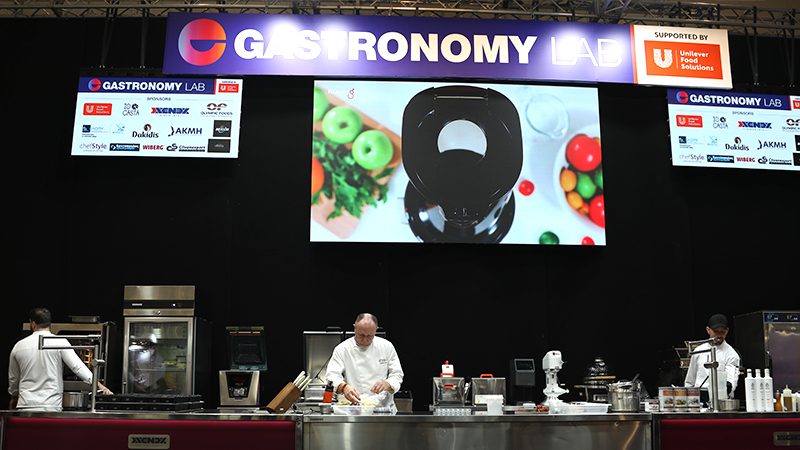
The master chocolatier and pâtissier prepared two recipes live, step by step, sharing all the secrets behind a successful result. The first was white chocolate–coated bonbons with a 62% cocoa chocolate and tonka bean filling, and the second was a firmer white chocolate ganache, which he used to create a range of viennoiserie ideas ideal for an impressive buffet presentation.
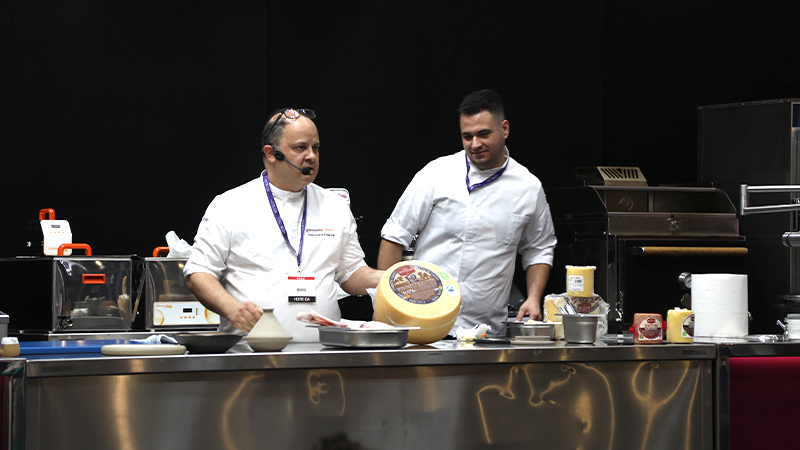
Chef Alexandros Koskinas, in his session “Naxos Land & Taste: Aged Cheeses and Greek Meat in New Expressions,” offered a contemporary interpretation of Naxian production, highlighting the priceless value of local cheeses and meats through new gastronomic approaches. In his live cooking show, he presented Naxos cow’s milk xinotyri with honeycomb, pollen, and oils of yarrow and lemon thyme; a cauliflower-focused dish featuring purée and caramelized cauliflower, caper–raisin chutney, cauliflower sauce, aged Naxos graviera, truffle, and lemon; and a dish of milk-fed lamb leg with spinach and cacio e pepe beans (again with aged graviera) and pickled fennel blossoms.
Chef Thomas Matsas from Thirio traced the “pathway” that led to modern Greek cuisine and the techniques that define it, through his presentation “Contemporary Greek Comfort: From Tradition to Modern Gastronomic Precision.” His first recipe featured sea bass with fava made from lathouri, a forgotten Greek legume variety — with cheese cream, shrimp tartare, pastirma oil, and a touch of salsify. He then prepared trahanas with glazed beef cheeks, sautéed baby carrots, chestnuts, mushrooms, potatoes, and chive–basil oil.
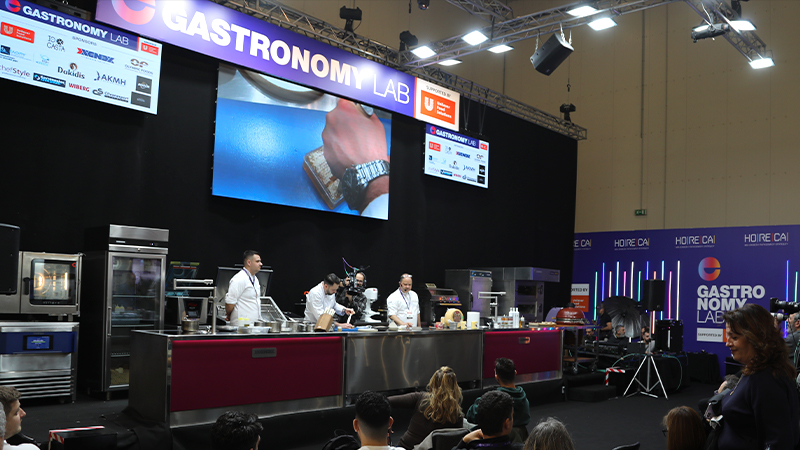
The successful Gastronomy Lab concluded with the Cretan meze of chef Michalis Hasikos, acclaimed chef and owner of Hasika, with the theme “The Revival of the Cretan Kafeneio”.
He described the true nature of this traditional meeting place and social hub, speaking about the precious local products and simple recipes once served there — many of which are now disappearing. With Crete being highlighted as a European gastronomic region, he also referred to his involvement in mapping all traditional kafeneia on the island, with the goal of showcasing and preserving them without losing their identity.
The day closed in a festive, distinctly Cretan atmosphere, with music, raki, marouvas, and classic kafeneio meze such as pickled wild artichokes with bulbs and large olives, Cretan cheeses, fried rabbit liver, sausage, apaki, and oftes potatoes.
Sunday, 15th February
Modernizing Culinary Tradition: Creativity, Expertise and Zero Waste
Chef Dimitris Boutsalis, with international experience in some of the world’s top restaurants, brought contemporary Scandinavian cuisine into the spotlight and shared valuable insights on transforming raw ingredients, through his session “New Scandinavian Cuisine – Aging, Fermentation and the Zero Waste Philosophy.”
He presented four dishes crafted with Scandinavian techniques and selected Greek ingredients: a salad with cucumber, kohlrabi, green apple, almond, valley shrimp tartare and caviar; smoked stamnagathi grilled over charcoal with baby lettuce and pickled vegetables; horse mackerel sashimi with watercress and dill-infused oils, double cream and wasabi; and finally, flamandoux oysters grilled over charcoal, served with oyster jus beurre blanc, seaweed oil and green apple.
The baton was then passed to the Sani/Ikos team, specifically to the Corporate Executive Chef of Sani Resort, Nikos Pastargiou, and the Corporate Executive Chef of Ikos Resorts, Thanos Kappas, who delivered a mini masterclass filled with insights and tips on creating a complete a la carte menu from scratch for a large hotel portfolio, in their presentation “The Art of A-la-Carte Menu in a 5-Star Resort: Mastering the Essentials.” The session was introduced by Anastasia Dimitriou, Communications Manager at Sani/Ikos, who spoke about the group’s history and its modern identity.
The chefs then prepared two dishes in a live cooking demonstration: Chef Pastargiou presented grilled sea bass with smoked greens, while Chef Kappas showcased sesame-crusted salmon with yuzu and rice.
Next on stage was Marios Petrakis, Resort Executive Chef of Daios Cove, who has deeply explored the culinary heritage of Crete. He brought forward his know-how and creative perspective in a journey through the origins and evolution of classic dishes, under the concept “Cretan Heritage – Modernising the Classics.”
During his session, he prepared two recipes: ravioli shaped like traditional kaltsouni, filled with bean soup cream and topped with carob, served with smoked mackerel, bean cream, sun-dried cherry tomatoes and pickled wild celery; and a modern fricassée with grouper, kale, collard greens and zucchini blossoms, accompanied by seafood dumplings, pickled greens and fennel foam.
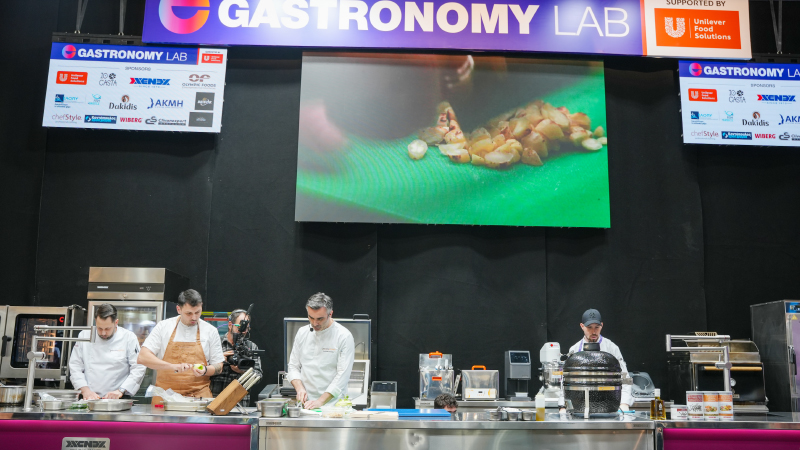
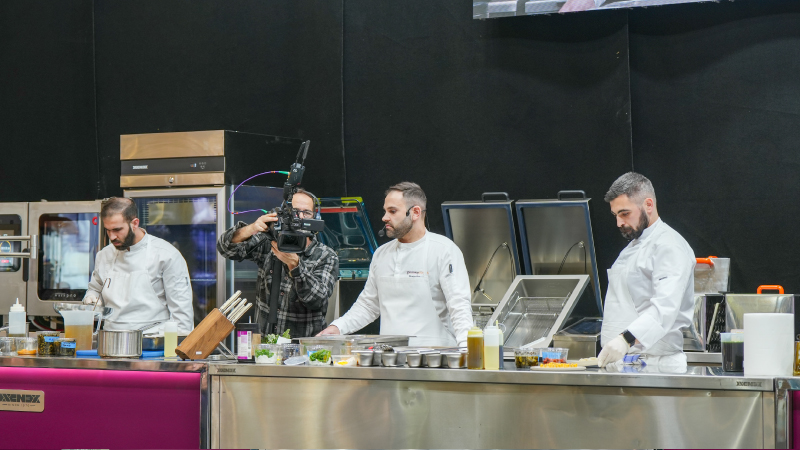
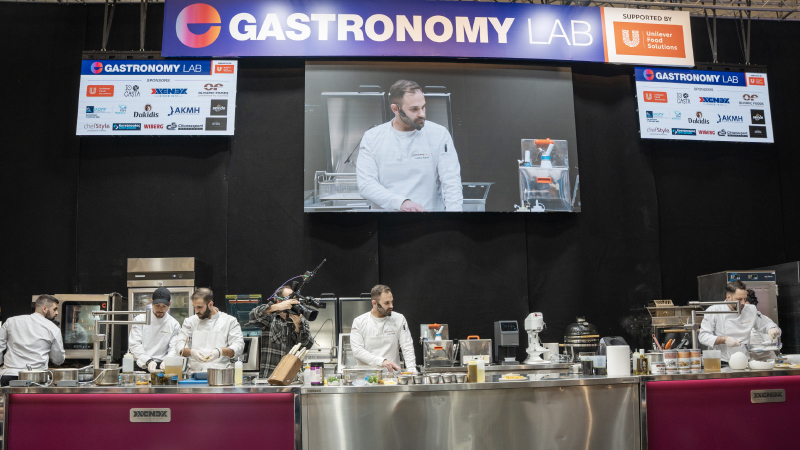
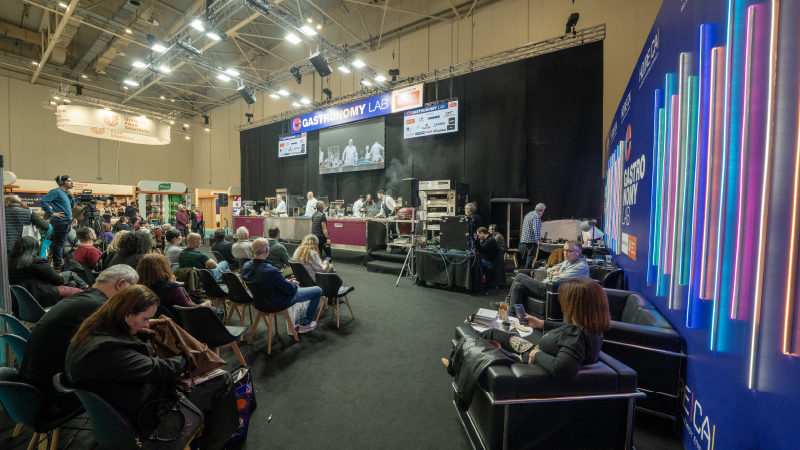
Chef and Research & Development Specialist Dimitris Kontaratos, from the culinary workshop Lakanis, took the Gastronomy Lab audience on a fascinating gastronomic journey titled “The Marriage of Art and Technique in Stews and Urban Cuisine.” He shared the philosophy behind his restaurant and its menu, and in a live cooking demonstration prepared his own interpretation of a traditional dish from Rhodes, the Lakanis, a hummus variation, and concluded with a raw preparation: tuna tataki with parsley salad.
Chef Alexis Zopas, a name closely associated with Scorpios in Mykonos, spoke about the crucial role of proper marinades that enhance rather than overpower the main ingredient, in his presentation “Before the Fire: The Power of the Marinade.” He defined the concept, analyzed how marinades affect protein structure, and prepared two versions—one for fish and one for meat.
The day concluded with the session “Gastronomic Memory and Contemporary Expression” by Michalis Marthas, chef patron of Kapadiko in Kalymnos, who illuminated the pathways that emerge when culinary memory meets modern gastronomic storytelling. Chef Marthas discussed the philosophy behind his restaurant and dishes, the sustainability practices he applies, and the ways he supports the local community of Kalymnos.
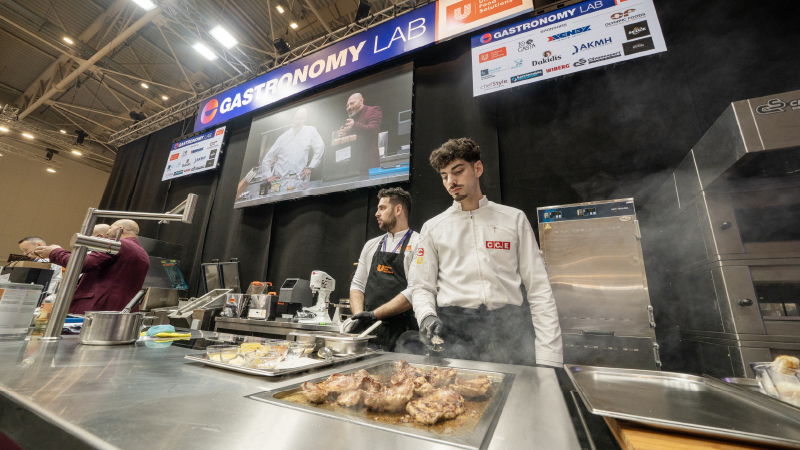
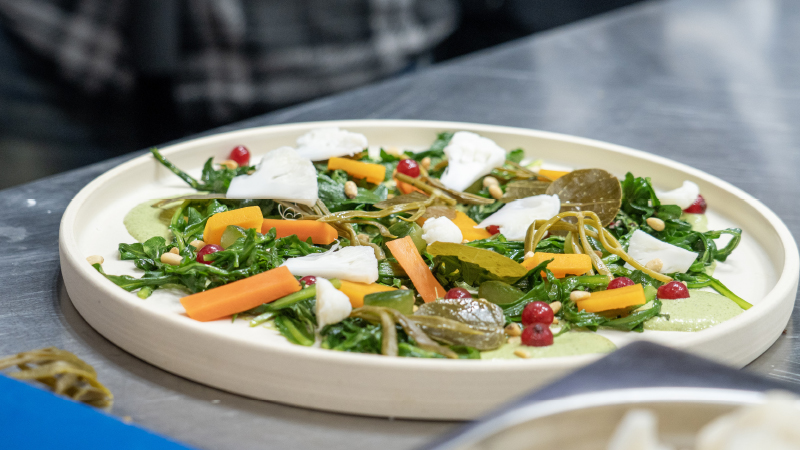
He then prepared four dishes: first, a taramas made from fish roe sacs, served with red seaweed and a cracker made from fish bone flour; followed by a low-waste dish using various preparations of a single ingredient—celeriac. His third creation was a complex dish—one of his personal favorites—featuring artichoke, squid, and Tinos pork ham. The session concluded with a fish fricassée with baby lettuce, lemon emulsion, golden herring caviar, avgolemono espuma, seaweed powder, crispy rice and celery mayonnaise.
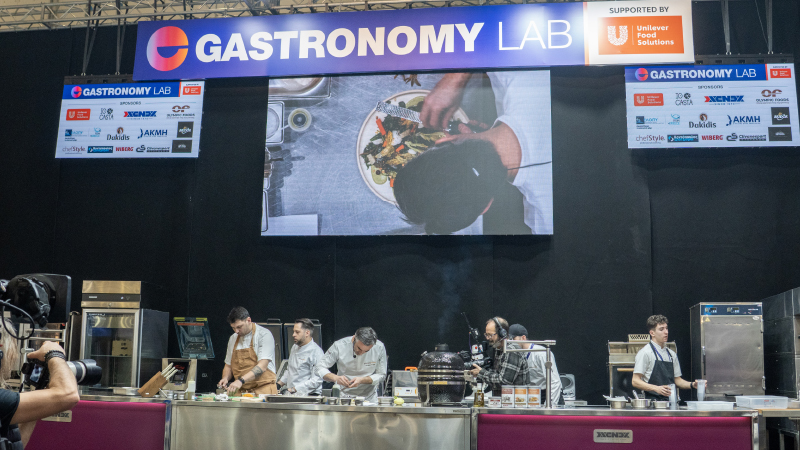
Saturday, 14th February
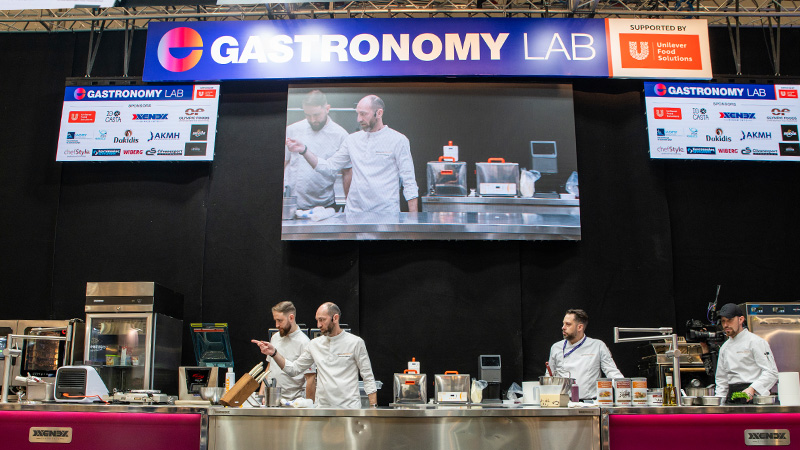
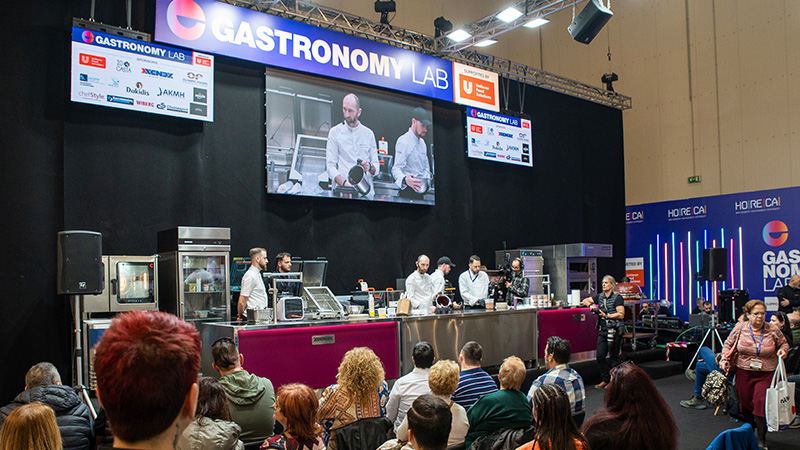
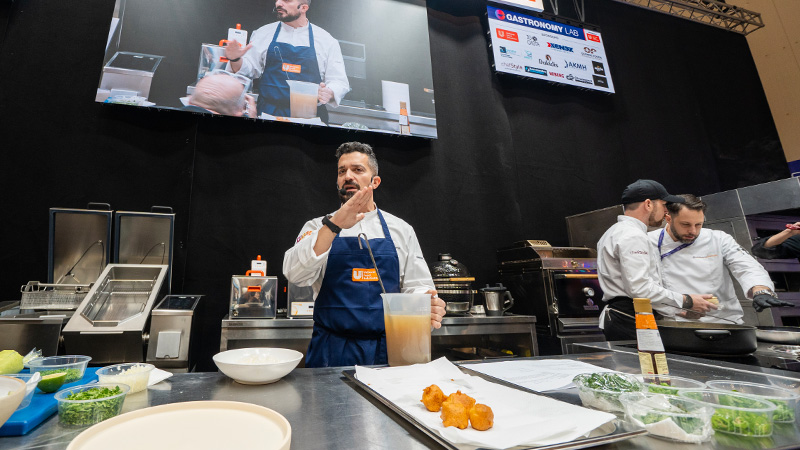
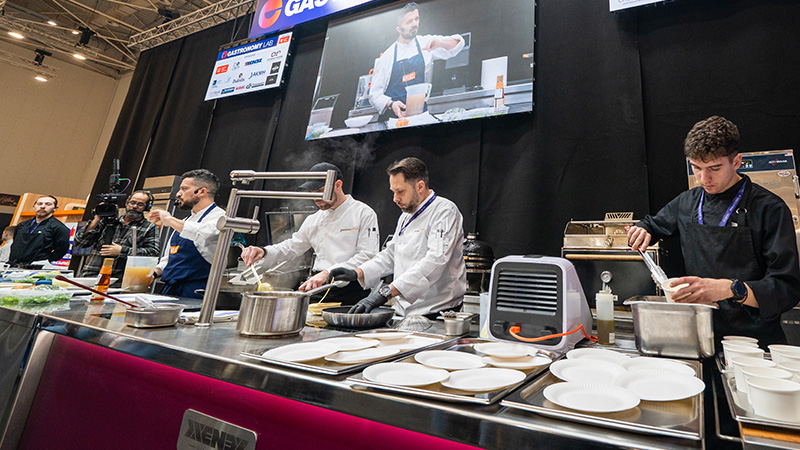
Gastronomic Trends and Creations on the Second Day of the Gastronomy Lab
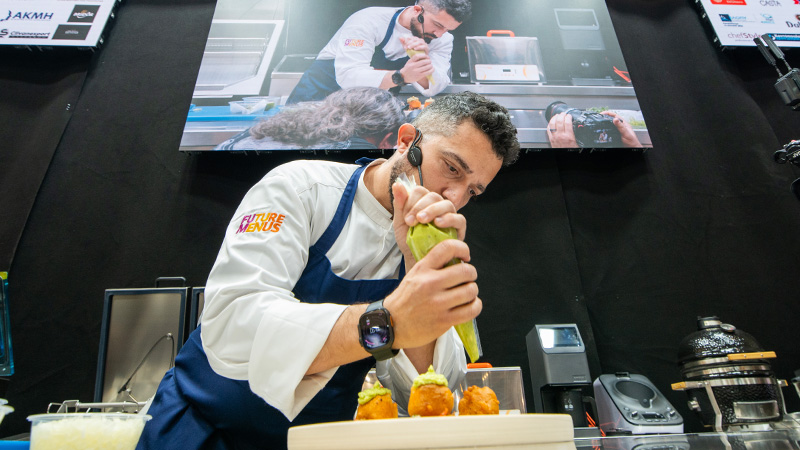
The second day at the Gastronomy Lab stage, held within HORECA 2026, began with Executive Chef and owner of Po’Boys BBQ, Vasilis Sporos, presenting the session “Future Menus: The New Trends in Street Food.” As he emphasized, “Street food for me is magical and unpretentious. You see the cook preparing it with their hands, and that way you build a relationship with your food.” In this presentation, powered by Unilever Food Solutions, he prepared two recipes using 100% gluten‑free ingredients: Thai Curry Ramen and Aegean Fish Tacos.
Next, the chef of Noble Gourmet Restaurant in Rhodes, Spyros Kougios, shared with the audience the restaurant’s techniques for the contemporary “translation” of Rhodian gastronomic tradition. This is an ongoing work in progress by Executive Chef Giorgos Troumouchis, who has spent years collecting the island’s authentic recipes and “transforming them without disrespecting them.” On the Gastronomy Lab stage, Kougios created—among other dishes—an elevated cuttlefish risotto presented in the form of ice cream served in a cuttlefish‑ink cone, as well as a gourmet bread made with trahana flour.
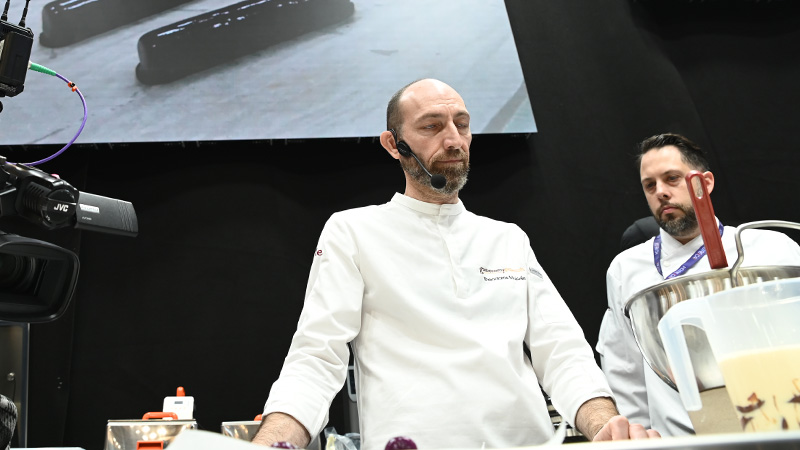
The baton was then passed to Varoulko Seaside’s Pastry Chef, Thodoris Moisidis, with the session “Garden Pastry – From the Garden to the Dessert: Vegetables in Modern Pastry.” Staying true to the concept, he prepared a carefully crafted beetroot dessert and a potato tartlet. Thanks to his earlier background in cooking, all the creations he prepares at the restaurant always incorporate some type of vegetable.
After a brief greeting from the representative of Clement Design—whose official distributor in Greece is Chefstyle – Professional Clothing—the stage welcomed the Pastry Chef of Four Seasons, Michalis Chatzikalimeris. Visitors of the Exhibition had the chance to watch live the preparation of three fine‑dining desserts (a pre‑dessert, a main dessert, and a petit four), featuring an intense combination of coffee and chocolate.
Finally, chef and owner of Pomo d’Oro in Corfu, Aristotelis Megoulas, described several contemporary Surf & Turf creations that bring together land and sea. In his cooking demonstration, he shared innovative techniques that, as he noted, “bring familiar flavors to the table in unconventional ways.” Standout combinations included sea bream tartare with lardo and skewers of shrimp and snails.
Friday, 13th February
Explosive Kickoff of Techniques, Innovations and Flavors
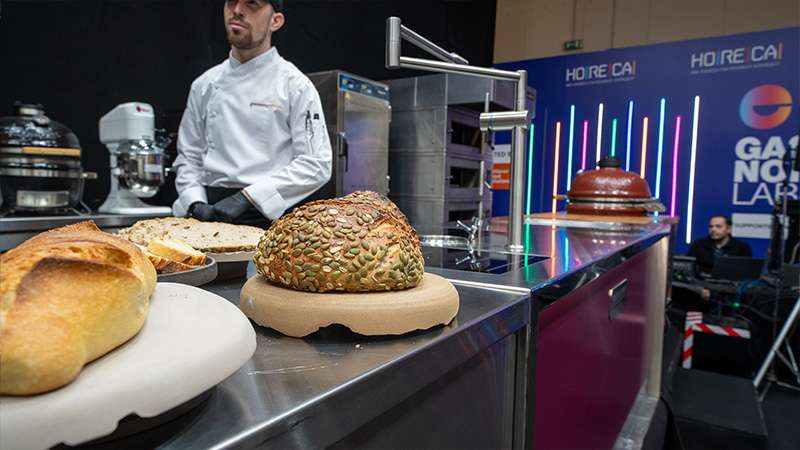
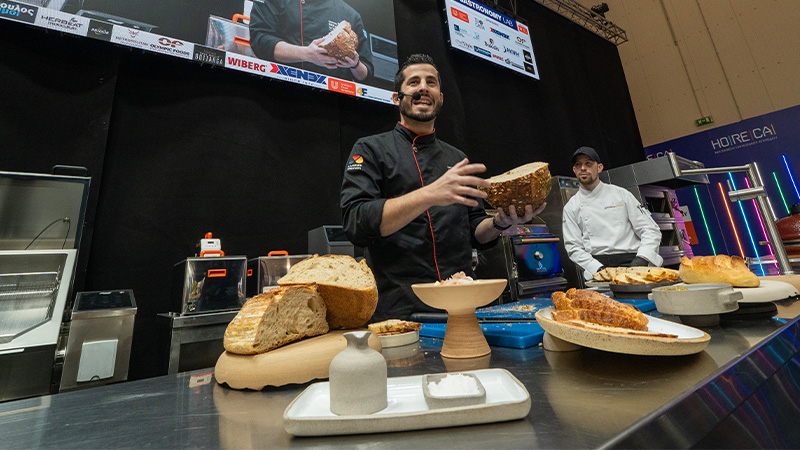
The first day of the Gastronomy Lab at HORECA 2026 began with great interest. On the influential stage of Hall 4, the opening session was led by International Bread Sommelier Dimitris Fragkogiannis. He delivered a live bakery and bread‑tasting class, during which the audience sampled different types of bread. “Bread will dominate as a luxury product. We will see more and more boutique bakeries producing fewer breads but of higher quality,” he noted.
Next, Elise Masurel, former CEO of Alain Ducasse and now Co‑founder of Catalyst.ai Academy, shared smart ideas on how to use AI tools for menu design as well as staff and customer management. “It is no longer just an option: through AI, you save time and energy so you can focus on your strategic vision, on creative and innovative projects,” she emphasized.
The stage was then taken by Amaury Bouhours, Executive Chef of Le Meurice – Alain Ducasse Restaurant and two‑Michelin‑star recipient, together with Jérôme Lacressonnière, Executive Chef Director of Ducasse Conseil, presenting the session “Contemporary Michelin Cuisine – Broths, Smoking & Modern Contrasts.” They demonstrated a recipe featuring scallops and fresh vegetables, crafted with their signature technique to highlight a wide range of textures and flavors.
Michelin‑starred chef Nikos Karathanos followed, offering visitors of HORECA the chance to taste the contemporary urban expression of Greek cuisine. He prepared classic “orfana” stuffed vegetables, as served at his restaurant Ateno Cook & Deli. Using refined techniques, he created a sophisticated dish based on his philosophy that “great food is simply very good food, properly cooked — food that, when you close your eyes, you know exactly what you’re eating.”
Then, two‑Michelin‑star chef Nikos Roussos, under the theme “One ingredient, endless dishes!”, presented three completely different creations with a common flavor denominator: Hellmann’s mayonnaise. Representing Unilever Food Solutions, he praised the ingredient’s versatility, saying, “It plays a leading role without being the protagonist of the dish — that’s why it’s chosen by everything from street‑food shops to fine‑dining restaurants.” The audience enjoyed an Athenian salad tartare (with sea bass), octopus hot dog, and the “from the earth” salad featuring carob croutons, cherry tomatoes and a variety of pickles.
Finally, Vasilis Makrakis, the Chania‑born chef of the off‑grid, farm‑to‑table Milia Mountain Restaurant located in the medieval settlement of Milia, demonstrated live how Cretan tradition transforms into a modern gastronomic experience. He shared the secrets of his recipe for wood‑oven pork shoulder, accompanied by preparations of leek‑celery and a wild‑fennel sauce. With this delicious finale, the first day of the Gastronomy Lab concluded ideally, highlighting the knowledge, innovation and practices that are redefining the Foodservice industry.