

The Future of Hospitality: Technology, Sustainability, and Digital Strategy in the Service of Competitiveness
Monday, 16th February
Completion of the Business Lab: A Day Dedicated to Financing and Strategy
The fourth and final day of the Business Lab at HORECA 2026 concluded in the most substantial way. From how bookings are generated, to how decisions are financed, and how an investment matures in order to truly yield returns. It was a day of strong interest, full of practical takeaways, tying together the major priorities of the market into one chain: sales, strategy, capital, development.
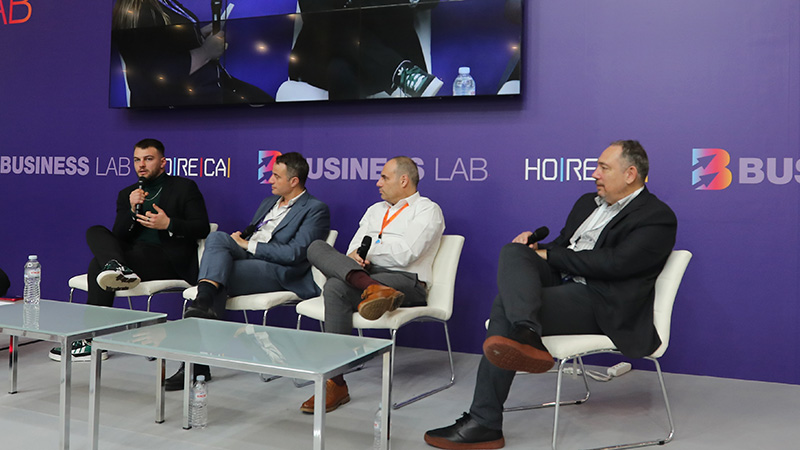
The program opened with the panel that has always concerned every hotelier, but today takes on a new dimension, as it explains the realistic role of direct for a hotel: strategic objective or complementary channel.
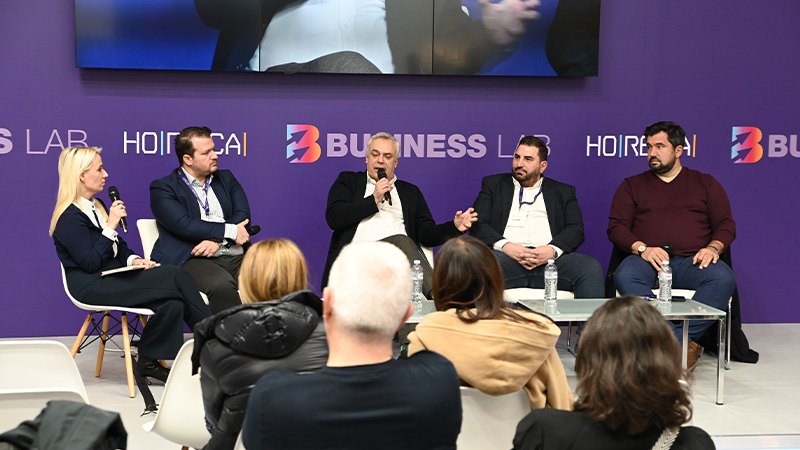
Moderated by journalist Viki Vamiedaki, the panel featured Markos Georgiou, Managing Director of Loguers, Marios Kounelis, Chief Sales Officer of webhotelier–primalres, and Thodoris Katsimpras, COO of BookOnlineNow. The discussion unfolded across four clear pillars. First, direct as it exists in practice, expectations versus reality, with emphasis on the most common mistakes in efforts to increase direct bookings, and on cases where direct fails not because of the OTAs, but due to the hotel’s own flawed strategy.
This was followed by the section on parity, OTAs and balance, focusing on how a hotel can strengthen its direct channel without breaking parity or creating conflicts, as well as on practices and tools that reinforce direct without pricing clashes.
A highly engaging case study followed, because it spoke with numbers. Marios Gryparis, Owner of Hotel Ninemia Stay and Play in Karpenisi, presented the impressive trajectory of the property, with more than 9 out of 10 bookings coming directly. A case that demonstrated that when there is the right strategy, consistency, and clear positioning, direct can become the main sales pillar — not a perpetual aspiration.
The baton then passed to financing, where strategy requires capital and proper preparation to move forward. Moderated by Viki Tryfona, journalist at Power Game, the panel featured Kostas Vamvakas, CEO of VK PREMIUM Business Development Consultants, and Paris Geronikolós, Director of Investment Funding Services at Diadikasia.
The discussion focused on how an investor or entrepreneur can choose the right financing based on criteria that lead to maximum benefit, on active and upcoming programs for HORECA businesses — ESPA, Development Law, TEPICH III, as well as on the remaining time frame, given that the loan component of the Recovery and Resilience Facility concludes in 2026.
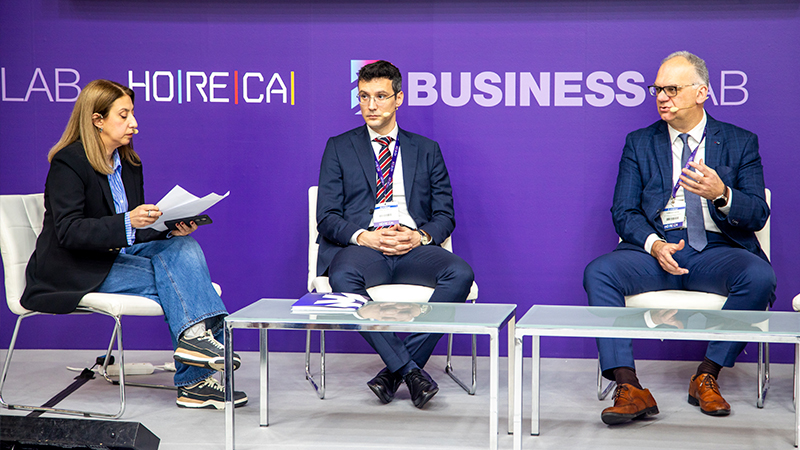
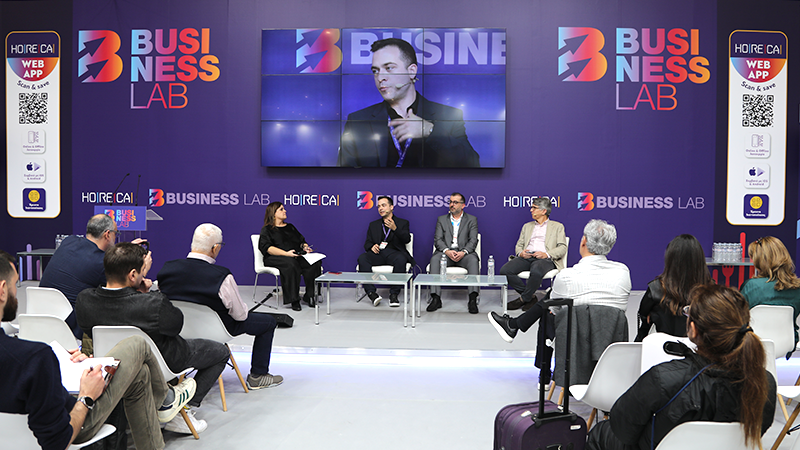
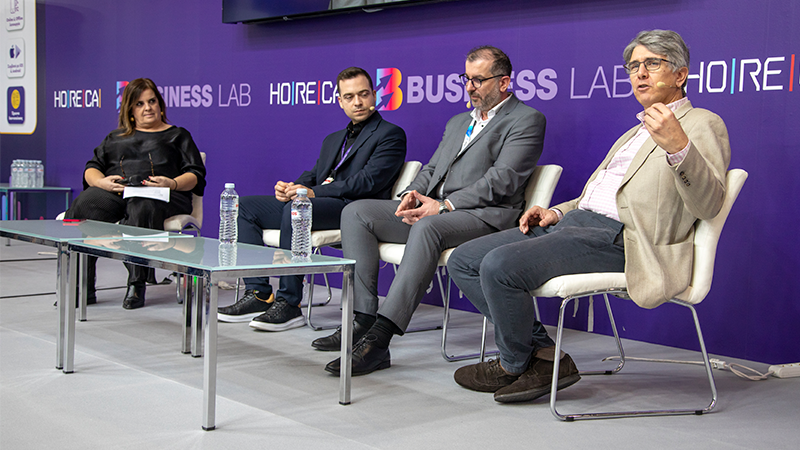
Particular emphasis was placed on key points of attention when preparing the application file, avoiding mistakes, on–off criteria, correct documentation, and examples of financing that helped HORECA businesses grow. The panel closed with the core message of maturity: a business needs to have an investment plan ready, so it can seize opportunities as soon as a new program opens.
In the next panel, the discussion moved to the heart of operational reality: what investment means in practice and when a renovation or upgrade translates into returns. Moderated by journalist Viki Vamiedaki, the panel featured Theodora Varanaki, co-owner of Varanakis, and Vasilis Zymnis, Director of Development Programs at Revival Consulting Services. The framework was set from the start: for a hotel unit, what is the real challenge, development, renovation, or proper operation in terms of cost and performance.
The discussion progressed into substantial topics that touched the market exactly where it hurts. It examined when an investment in equipment is a true investment and when it is simply the purchase of machinery, which projects are considered mature for financing today, the common mistakes in hotel and F&B renovations at the infrastructure level, and which errors can cut or delay an application before it even reaches the approval stage.
The section on business plan vs. reality was particularly valuable, highlighting how often plans appear that do not stand up operationally, as well as the cost of equipment when chosen without serious operational planning. The discussion continued with operating costs and the areas of a hotel that most affect daily expenses, such as kitchen, laundry, and back of house, along with the interventions considered safest from an investment and financing perspective.
The day concluded with a discussion that opened up the horizon: development through ecosystems and European opportunities. Moderated by Garyfallia Tampaki, Innovation Consultant in Tourism, Shipping and Agri-food, EEN Hellas, NCP Horizon Europe, MSCA, the panel featured Katerina Saridaki, Startup Acceleration Programs Director at CapsuleT, Georgios Avatangelos, Commercial Banking Senior Director, Agricultural Entrepreneurship Centers, Piraeus Bank, Nikiforos Kritikós, Co-founder and CEO of iSPACE, and Anastasia Sarchosoglou, Project Manager at the Enterprise Europe Network, National Documentation Centre, Innovation Consultant in Agri-food and Coordinator of EEN Hellas. The panel brought brand, business maturity, financing, networks, tools, and European pathways into one frame, offering practical direction to businesses seeking to move from a good product to systematic growth.
Sunday, 15th February
Digital Marketing & Social Media: Day 3 of the Business Lab Reveals What Truly Delivers Results
The third day of the Business Lab at HORECA 2026 confirmed what the market already knows: digital is not “communication”—it is sales. The theme Social Media and Digital Marketing attracted strong interest and was highly successful, as it brought to the forefront the key question every hospitality and foodservice business is trying to answer: what truly works, what drives bookings, what generates revenue, and how it is measured.
The day moved from digital transformation in tourism and hospitality, to social media as a demand-generation tool, the real digital funnel, the complete marketing stack of a hotel, viral content for restaurants and cafés, 12‑month content strategy planning, and finally, the industry’s growing need for performance without waste, supported by clear ROI measurement.
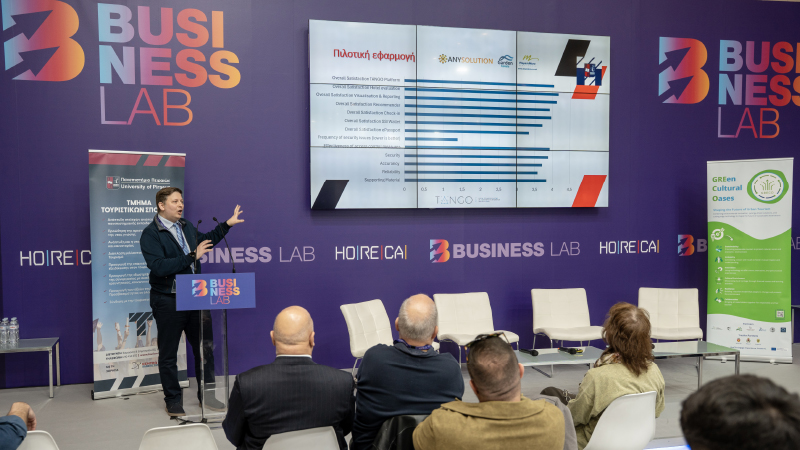
The day opened with the participation of the Department of Tourism Studies of the University of Piraeus, featuring presentations of applied projects and a workshop on digital transformation. The focus was on practical tools and solutions that businesses and destinations can adopt, confirming that digital transformation is not a vague narrative but a set of choices, data‑driven decisions and smart tools that enhance competitiveness.
In the first major panel of the day, moderated by Penny Georgakopoulou, Founder of Smart Ideas, the audience received exactly what it was looking for: clear answers and realism. The panel included Maria Theofilopoulou, Social Media Manager at Mariner, Michail Ikoutas, Managing Partner at Three Sixty Marketing, and Vasilis Polyzos, Co‑Founder and Managing Director of THE VSCOPE.
The discussion clarified the difference between “beautiful content” and content that drives action. It emphasized that social media in the HORECA sector work only when they are part of a strategy—not a sporadic presence—when they are tied to a clear objective, proper targeting, consistency and, above all, when they guide the user to the next step of the journey, from inspiration to booking. The conversation focused on what actually converts into demand, how trust is built, and which mistakes lead businesses to invest time and budget without results.
A case study followed with Giorgos Giannios, Business Partner at Reload, who connected theory with real‑world operations. The presentation focused on the user journey and how a post becomes interest, interest becomes a click, a click becomes a lead, and a lead becomes a booking. With a practical lens, it highlighted the importance of continuity between content, landing pages, website experience and clear calls to action, ensuring that digital functions as a revenue engine rather than a “shop window.”
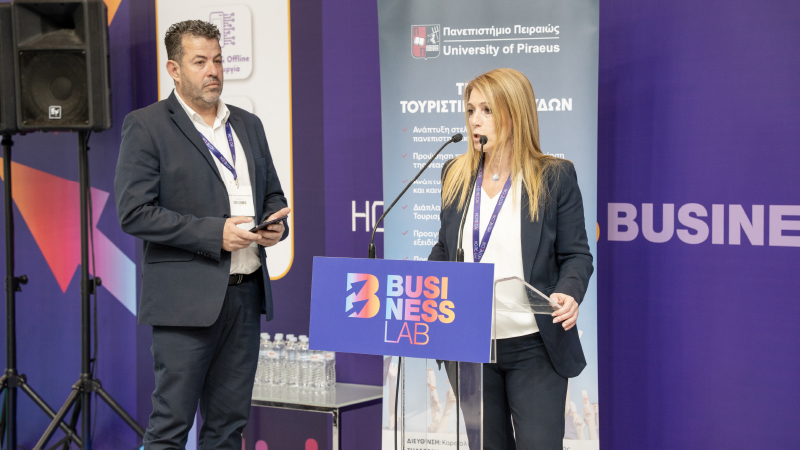
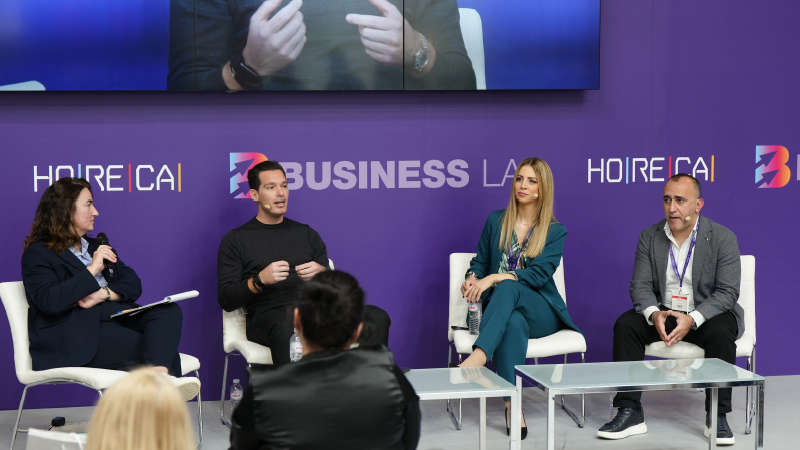
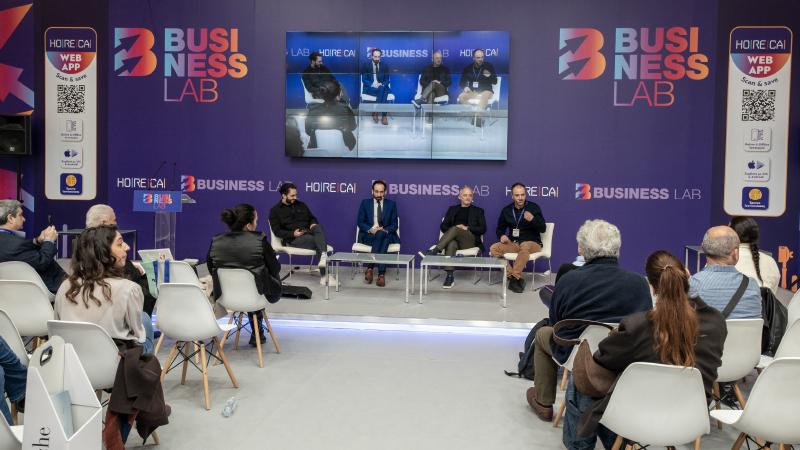
Next, the Business Lab moved into the full digital marketing ecosystem of a hotel. Moderated by Alexandros Filiopoulos, Instructor at IEK DELTA, the panel featured Dimitris Serifis, CEO of Nelios, Christos Ditoras, Digital Marketing Manager at Mercan Capital Greece, and Stathis Katsoulas, Web Developer and SEO Expert at WEB In Tourism.
The discussion demonstrated that results come when all components align: a website that converts, SEO that builds steady demand, ads that don’t waste budget, analytics that reveal the truth behind the numbers, and—critically—reputation management, because online reviews are not just feedback; they are a key decision factor. The panel provided a comprehensive framework for building a modern digital ecosystem focused not on exposure but on measurable performance.
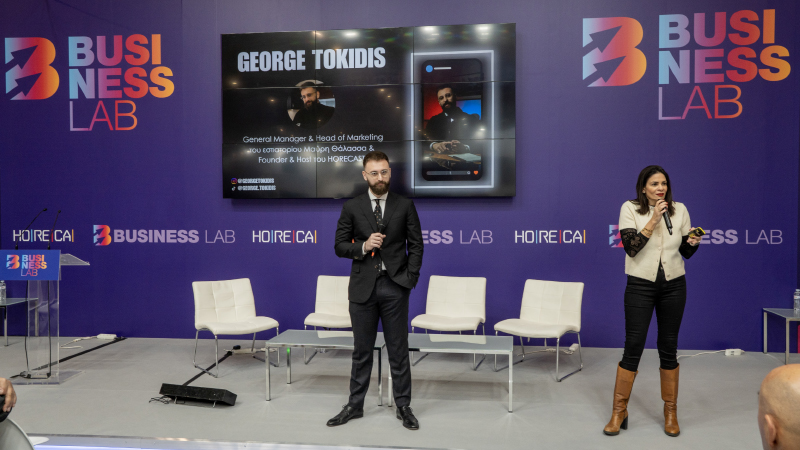
The workshop with Tina Michailidou, Founder of GR8 Communications, and Giorgos Tokidis, Business Support for HORECA, brought the discussion into the restaurant space with a fully practical approach. The message was clear: a dish does not go viral—an experience does. From crafting the narrative, to capturing the moment, activating the audience and turning content into real foot traffic, the workshop served as a guide for businesses seeking to move beyond the ordinary and build a loyal, returning community.
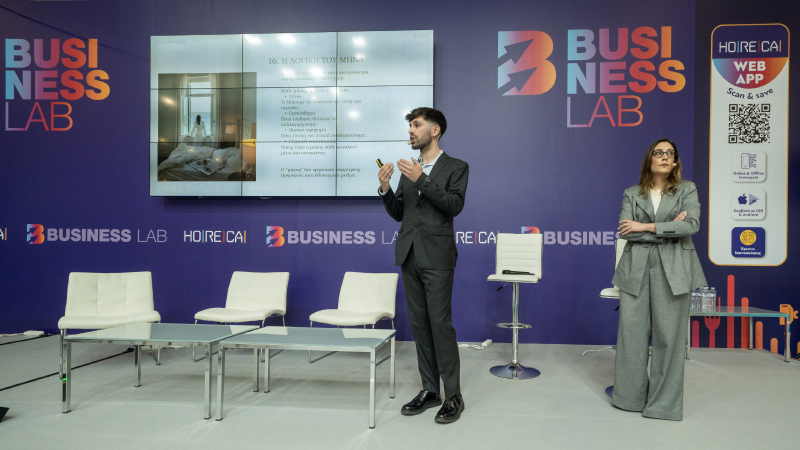
The next workshop addressed the major challenge of consistency. Margarita Machaira, Associate Client Service Director, and Nikos Peggaras, Content Curator at travelworks public relations, analyzed how to structure a 12‑month content strategy with rhythm, thematic pillars, seasonality, campaigns and key moments. The core message was that content cannot be improvised; it must be based on strategy and a plan that serves specific goals, builds identity and creates repeatability. The value of such a strategy lies in enabling businesses to operate proactively, leverage data and invest in content with longevity and measurable impact.
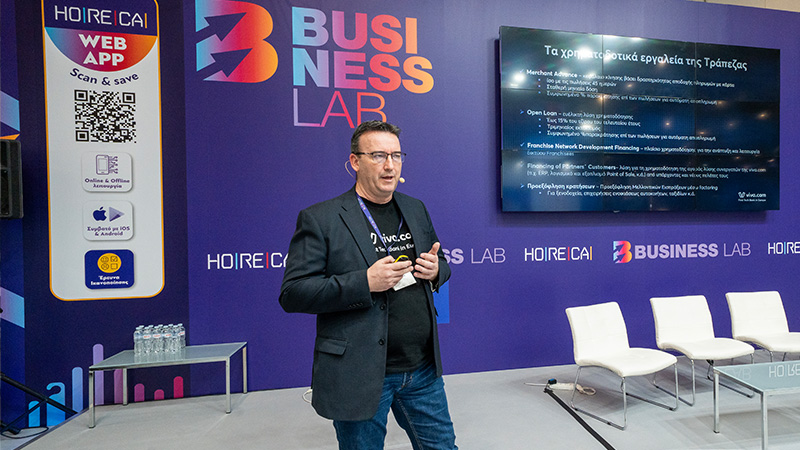
The day concluded with one of the industry’s most critical topics: measuring advertising performance. In the expert talk, Dimitris Mathioudakis, Co‑founder of Mind The Ad, focused on how to calculate the return on digital investment, which metrics matter and which are noise, how to set up proper tracking and goals, and how businesses can make decisions without wasting budget on actions that do not deliver results.
Saturday, 14th February
New Approaches for the Tourism and Hospitality of Tomorrow
The second day of the Business Lab at HORECA 2026 had a clear focus: people, sustainability, and space. Three pillars that may seem different, yet in practice intersect daily within a hotel, a restaurant, a bar—any hospitality business striving to operate efficiently, stand out, and remain resilient in the future.
With journalist Viki Vamiedaki as moderator, the day moved from tourism strategy and destination governance to the realities of the labor market, the new profile of travelers and consumers, the role of architecture as a revenue tool, and finally sustainability as an inevitable transition with concrete steps, standards, and measurable outcomes.
The University of Piraeus shows the way for the Tourism of Tomorrow: Sustainability, Destination Governance & Digital Innovation
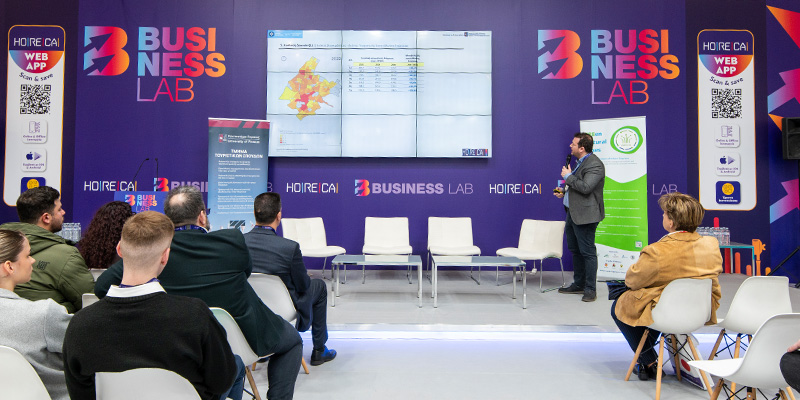
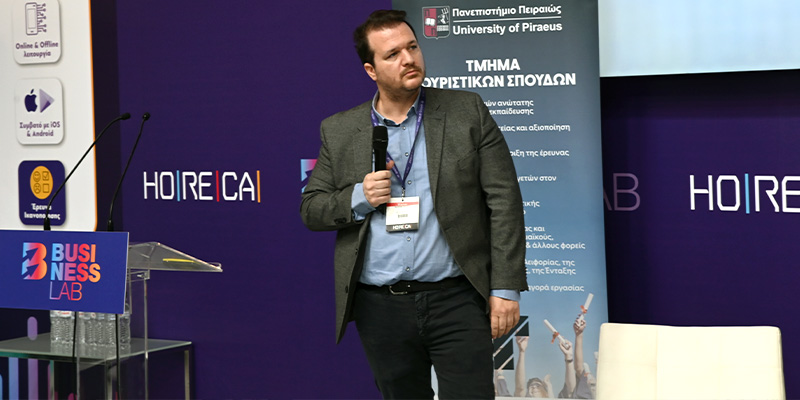
The day opened with a session of high institutional and practical value, setting the big picture: how tourism is planned when concepts such as “carrying capacity,” “sustainable development,” “cultural interventions,” and “data” are not theory but policy tools. Professor Petros Maravelakis, President of the Department, introduced the framework for the tourism of tomorrow, emphasizing that destinations require governance, measurement, and collaboration among multiple stakeholders.
Associate Professor Sotiris Varelas then presented applied projects on the carrying capacity of the Municipality of Athens, highlighting its importance for sustainable planning and the management of urban tourism destinations, as well as tools for documentation, monitoring, and supporting public tourism policies. A discussion followed with voices from the market and institutional bodies, including Evangelos Marinakis, President of the Athens Development & Destination Management Agency (ADDMA S.A.), who offered the perspective of an organization implementing actions at the heart of urban tourism.
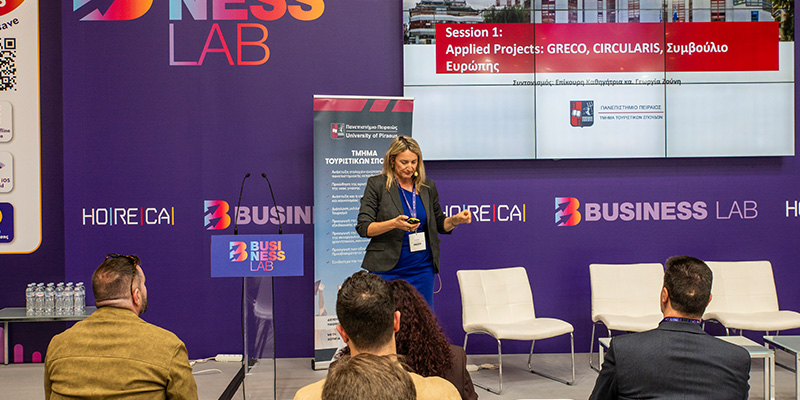
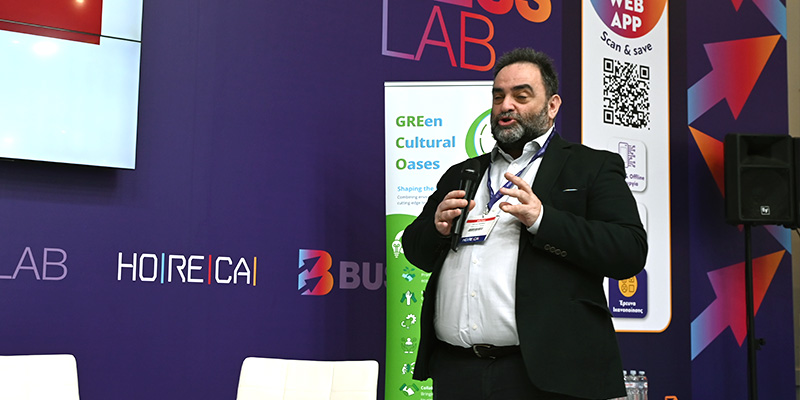
Assistant Professor Georgia Zouni presented projects and interventions connecting values, tourism experience, and sustainability, with the GreCO Green Cultural Oases as a central example. She emphasized the University’s role as coordinator of multi-stakeholder interventions in urban environments and the value these applications bring to tourism at a European level.
The session concluded with an international perspective through a mini-interview with Dr. Ioannis Papas, Director for the Mediterranean Region at the Global Sustainable Tourism Council, focusing on how sustainability criteria translate into measurable practices and destination competitiveness.
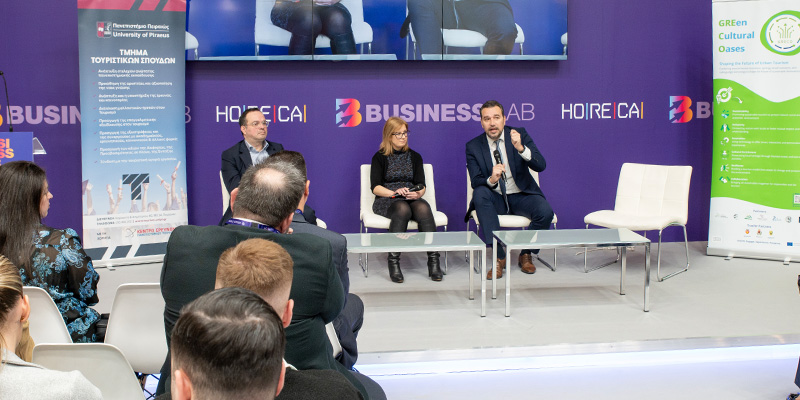
The second session brought forward two critical areas: resilience and value-driven tourism, along with the real picture of the labor market. Moderated by Myron Flouris, former Secretary General for Tourism Policy & Development, the workshop emphasized holistic governance, value tourism, and destination resilience.
Participants included Dr. Zoi Vardanika from the Ministry of Tourism and Alexandros Thanos, Special Advisor at SETE, opening the discussion on how Greek tourism is shifting from volume to value and from fragmentation to governance.
The session concluded with the first results of a nationwide labor market survey conducted by kariera.gr in collaboration with the University of Piraeus. Assistant Professors Georgia Zouni and Katsanakis presented findings on skill gaps, staffing challenges, and the needs of employees and employers, with insights from Nikos Foros, Talent Intelligence Manager at kariera.gr.
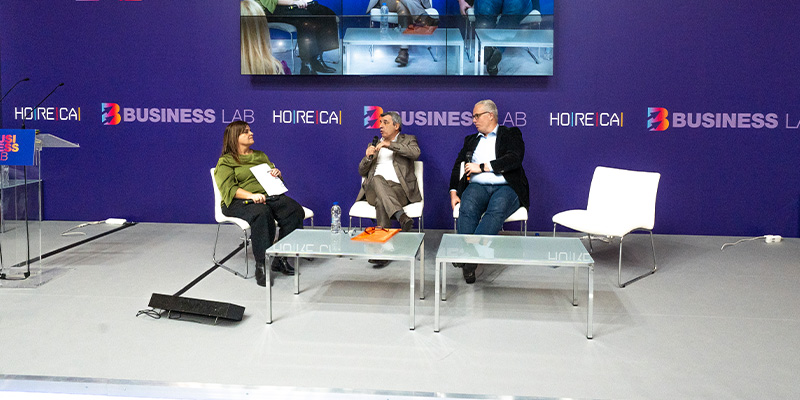
Human Capital as a Competitive Advantage
The focus then shifted to what may be the most crucial field for the future of HORECA: people. In a panel moderated by journalist Viki Vamiedaki, participants included Konstantinos Sergopoulos, Associate Professor at the University of West Attica, and Anestis Anastasiou, Senior Trainer and HR Consultant.
The discussion clarified the new landscape: how the concept of a “good job” has changed, whether we are facing a personnel crisis or an expectations crisis, what employees truly seek, and where employers often misinterpret signals. Human capital was reframed as a measurable competitive advantage—not a cost—linked to customer satisfaction, repeat bookings, revenue, and the practices that differentiate standout businesses.
An expert talk followed, bringing in the customer and market viewpoint. Tasos Pediaditis, COO of Synapse Hospitality, analyzed the 2026 traveler and foodservice consumer profile—what they seek, what they consider a given, and what they now reject. A talk that connected strategy with real behavior, where products are judged in seconds and validated through experiences. Architecture and design took center stage—not as aesthetics, but as strategy.
Moderated by Viki Vamiedaki, the panel included Aris Giannopoulos, Founder, WOA Architecture, Simos Liakos, Partner & Lead Architect, Liakos Associates Architects, and Angelos Tzigkounakis, Editor-in-Chief, EK Magazine. The discussion opened with a critical question: when does design stop being “beautiful” and become a revenue tool? Topics included how space functions as a booking driver in the digital environment, how design varies by business type, and how it influences flow, dwell time, choices, and ultimately average spending.
Emphasis was placed on balancing impact and functionality, costly design mistakes, the importance of involving architects early, and the relationship between identity, storytelling, and brand experience. The conversation also touched on ROI in renovations, how success is measured post-delivery, and how sustainability can be integrated into design as a competitive advantage that customers perceive.
In the next expert talk, Alexandros Kitriniaris, Founder & CEO of KAAF, positioned sustainable design as an operational necessity. With a practical approach, the discussion shifted sustainability from “concept” to “implementation,” emphasizing choices that endure, reduce costs, and enhance experience.
A panel on sustainable transformation followed, with 2030 as a European milestone toward decarbonization and 2050 toward climate neutrality. Participants included Panagiotis Kenterlis, Commercial Director, Bureau Veritas Hellas, Manos Nerantzákis, Energy Engineer & Consultant, Green Trust, and Kyros Asfis, Hospitality Digital Marketing Expert.
The discussion covered sustainability pillars, first steps in reducing carbon footprint, enabling technologies, regulatory frameworks, and international certification standards.
Special attention was given to communicating sustainable practices credibly—avoiding greenwashing—and to how existing businesses with limited budgets can begin seeing results.
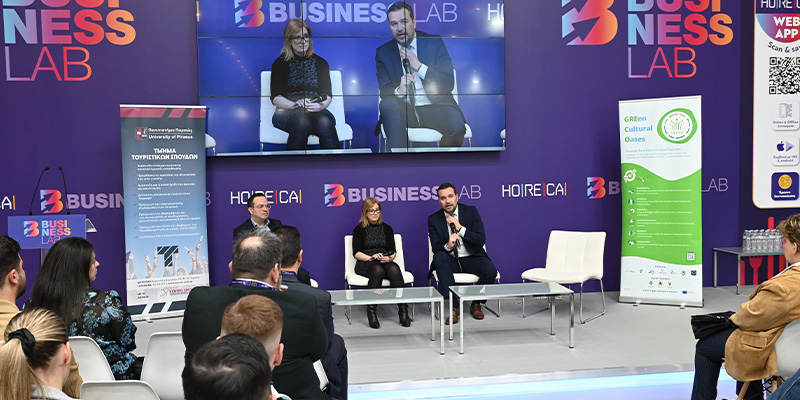
The second day concluded with a highly practical panel on digital transformation, guiding businesses through new digital tools, operational obligations, and recommended solutions. Moderated by Nina Gerarchaki, Secretary of S.KA.MI.GE., the panel included Dimitris Goumas, President of S.KA.MI.GE., Dimitris Kamarias, Member of S.KA.MI.GE., SEK Representative, and Michail Polygger, President of the Athens Accounting Association.
The discussion focused on how businesses can operate safely and consistently in the new digital environment, connecting daily operations with compliance, proper support, and solutions that streamline rather than burden the enterprise.
Friday, 13th February
First Day Filled with Ideas, Insights and Strategies for the Future of Hospitality
With strong momentum, a full hall and discussions that touched the core of the industry’s challenges, the first day of the Business Lab at HORECA 2026 began in Hall 3. For four days, HORECA opens a meaningful dialogue about the future of hospitality, bringing together professionals, entrepreneurs, academics and market executives.
The day opened with a comprehensive discussion on the challenges facing the foodservice sector. The panel was moderated by Magda Peistikou from INSETE, with speakers Spyros Kerkyras, F&B Entrepreneur, Dr. Sotiris Varelas, Associate Professor at the University of Piraeus, Giorgos Papadogoulas, PhD Candidate at the University of West Attica and F&B Consultant, and Gikas Xenakis, Chef at Aleria Restaurant.
The conversation highlighted the major issues restaurants face today—from cost and staff management to the effective use of artificial intelligence. Special reference was made to the most common mistakes in restaurants, as well as to the strengths of Greek foodservice that remain a competitive advantage in a constantly evolving environment.
The discussion then shifted to the hotel sector, moderated by Christina Kousouni, journalist at Naftemporiki TV. The panel featured Vasilis Riavoglou, Chief Growth Officer at Hotelinsider and HBIS, Nikos Tsitsoulis, Co‑founder of hotellab, and Dimitris Dimitriadis, CIO and Co‑Founder of TheFutureCats Innovation Consultancy. The speakers analyzed how artificial intelligence is transforming revenue management through smart pricing models, and how the overall commercial strategy of hotels is evolving.
The discussion focused on the new balance between online platforms and direct bookings, the importance of the right channel mix, and the need to preserve a hotel’s identity amid increasing automation. Emphasis was placed on customer experience, organizational change, the skills hoteliers will need in the coming years, and the enduring value of Greek hospitality—and how it can coexist meaningfully with AI tools.
A highly practical case study followed, presented by Sotiris Kopatsaris, Managing Director of Carpe Diem Santorini – Future Hotels. Through concrete examples, he demonstrated how artificial intelligence and automation can be applied to the daily operations of a Greek hotel, improving processes, revenue and the overall guest experience.
The Business Lab continued with a panel dedicated to the full digital organization of HORECA businesses. The discussion was moderated by journalist Viki Vamiedaki, with speakers Lambros Lambrianakis, General Manager of HIT Hospitality, Stratos Zervas, CEO of Business Cloud, Stavros Vasos, COO and Co‑Founder of Butler, and Michalis Bakouris, Managing Director of Entersoft One F&B. The panel highlighted the need for a holistic approach that connects operations, customer experience and revenue, emphasizing system integration, improved workflows and data‑driven decision‑making.
In the expert talk that followed, Alkis Rouggeris, Commercial Director of Epsilon Hospitality, focused on the practical application of artificial intelligence and automation in the daily operations of HORECA businesses, showcasing solutions that save time, reduce costs and enhance efficiency.
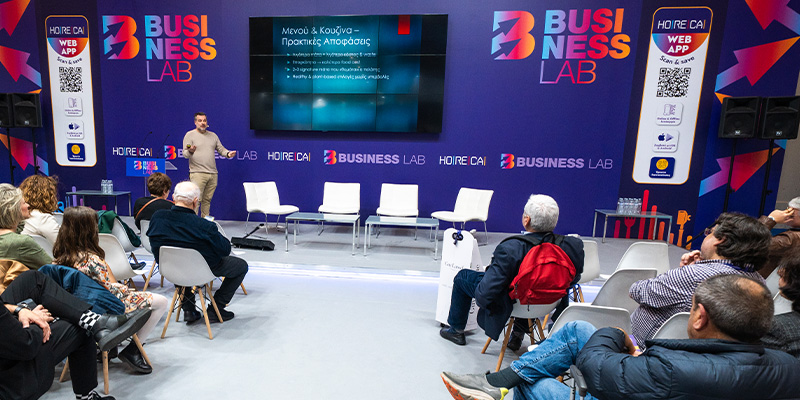
The first day of the Business Lab concluded with a panel dedicated to Greek gastronomy. The discussion was moderated by Giorgos Oikonomou from Nuthesia, with speakers Tasos Giatras, Vice President of POESE, Nikos Fotiadis, Executive Chef, Thanasis Yalouris from Forum SA, and Nikos Michalitsis from Hop On Communication. The panel highlighted gastronomy as a key pillar of cultural identity and economic development, emphasizing its role in the hospitality experience and in shaping the country’s international image.